The Retail Renaissance Is Structural, Not Cyclical: Insights from ICSC 2026

Having attended ICSC Las Vegas for 30 consecutive years, I’ve seen the commercial retail industry at its extremes, from the overbuilding that preceded the Great Financial Crisis to the widespread reset that followed the pandemic. What we are experiencing today is fundamentally different.
This cycle is not driven by exuberance but defined by constraint. More than a decade of limited net new development has structurally reshaped the supply-demand balance, forcing operators to become more disciplined, data-driven, and selective in how they deploy capital.
The energy at ICSC Las Vegas 2026 confirmed a clear shift: retail has moved beyond stabilization and into a period of sustained, momentum-driven growth.

Retail is now benefiting from over ten years of minimal net new construction, and this structural reality continues to be the engine that powers today’s strong fundamentals. Supply remains constrained not by choice, but by the combined pressures of capital markets, construction costs, and entitlement complexity.
The result is a retail sector characterized by high occupancy, steady rent growth, and renewed institutional interest. Capital that once avoided retail is now actively reallocating toward it, recognizing the durability of its income profile in a supply-limited environment. Transaction volume and leasing velocity reflect this renewed confidence, as demand for quality space continues to outpace availability.
What some might frame as “good timing” is the byproduct of a long period of disciplined capital restraint across the industry.
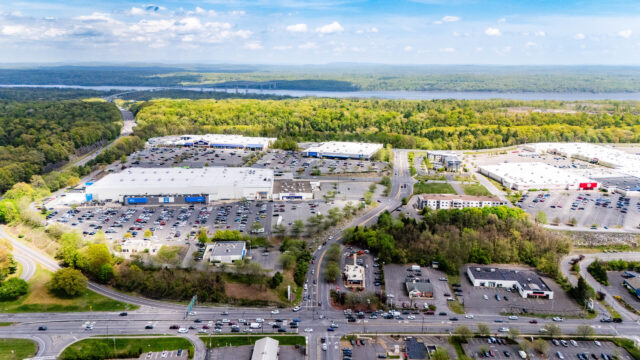
Within this environment, open-air, surface-parked retail assets have emerged as a clear winner.
Over the past several years, even unanchored strip and convenience centers have gained meaningful traction with both investors and tenants, narrowing the historical gap with grocery-anchored properties. This reflects a fundamental shift in consumer behavior toward speed, accessibility, and daily-use convenience.
These properties offer a compelling combination of durable cash flow, operational simplicity, and broad tenant demand. In a market defined by limited supply, their flexibility and relevance to everyday consumer needs position them as core assets in institutional portfolios.
In a constrained supply environment, the importance of the location of these properties has only intensified. At the same time, capital has become more fluid, increasingly willing to move beyond traditional high-growth regions into stable, often overlooked markets where fundamentals align with long-term strategy.
At the property level, the post-pandemic retail reset has produced a more resilient and focused tenant base. Leasing has structurally shifted away from discretionary apparel-heavy merchandising toward a mix centered on daily needs, value, and services.
Today’s growth categories are concentrated in food and beverage, value-oriented retail, wellness, and medical/service-based uses. The result is a more stable and necessity-driven tenant ecosystem that reinforces consistent traffic and long-term tenancy.
While location flexibility is increasingly important, in today’s supply-constrained retail landscape, capital flexibility has also become a defining differentiator. Firms with multi-sector capabilities are better positioned to allocate capital dynamically, pursuing retail opportunities when available, and deploying capital into complementary sectors such as multifamily or mixed-use when retail inventory tightens.
This flexibility also enables sophisticated operators to pursue retail properties with complicated capital stacks that are well-located but constrained by capital structure inefficiencies or fragmented ownership. By resolving these issues and repositioning the asset, investors can unlock value that is often inaccessible to less flexible capital.
The era of relying on instinct as a primary underwriting tool has passed. Today, decision-making across the retail ecosystem is increasingly driven by data, whether it’s AI-enabled site selection to real-time portfolio performance analytics.
Competitive advantage has shifted from access to transactions, to access to better information and faster insights. Landlords, retailers, and investors who can interpret data more effectively, and act on it more quickly, are consistently outperforming their peers.
Even with the best data and analytics, retail performance ultimately remains tied to the health and behavior of the consumer. In today’s K-shaped economy, pressure on middle- and lower-income households introduces uncertainty around the durability of spending.
While the luxury segment continues to demonstrate resilience, broader retail success will increasingly favor operators who deliver a consistent combination of value, convenience, and customer experience.
At the same time, geopolitical volatility and macroeconomic uncertainty remain persistent unknown variables. In response, investors are continuing to prioritize grocery-anchored and necessity-based formats, which have consistently demonstrated resilience across economic cycles.
Supply constraints, tenant selectivity, and the outperformance of open-air, necessity-driven retail were the key themes of ICSC this year, and all of them are closely align with MCB’s long-standing investment approach.
Our focus on grocery-anchored and daily-needs retail perfectly situates our portfolio within the most durable segment of the market. Limited new supply further enhances existing occupancy strength and provides meaningful leasing leverage across our assets.
Looking ahead, our strategy remains centered on a disciplined strategy to leverage data to inform our decisions, curate tenant mixes that reflect evolving consumer behavior, and accelerating leasing outcomes.
Retail is no longer a recovery story, but a structurally advantaged sector operating within a constrained supply environment.
The firms that succeed in this next phase will not be those chasing growth indiscriminately, but those that combine selectivity, speed, and data-driven precision to capture it.
In that sense, the “retail renaissance” is not a temporary rebound. It is a long-term reset.
Related News
Media & Press
Media Inquiries